
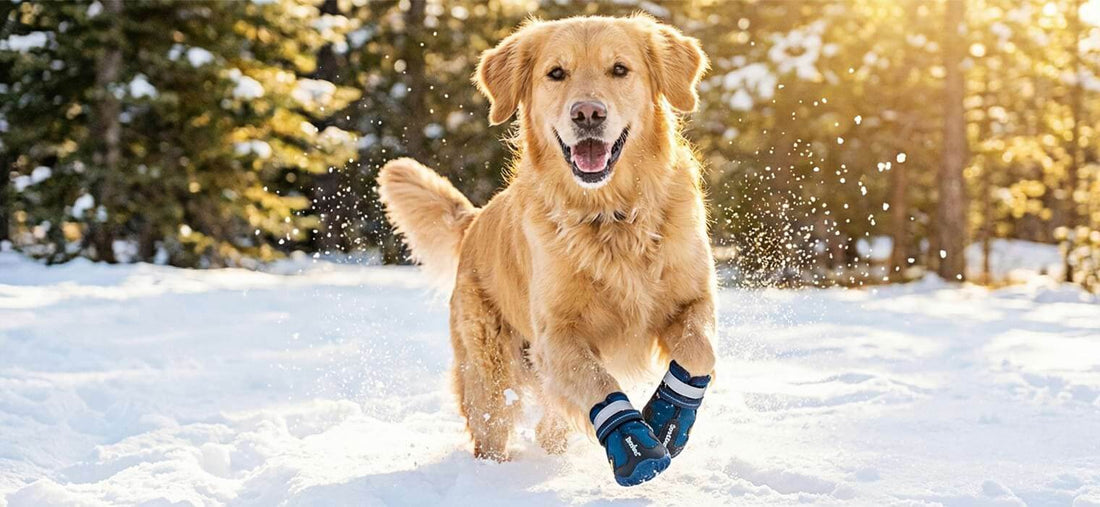
Do Dogs Need Snow Shoes? The Truth About Winter Paws
Do dogs need snow shoes? It’s a question that divides the dog park: Are boots a medical necessity, or are we just treating our pets like humans?
When the temperature drops to single digits, the temptation to skip the morning walk is overwhelming. However, veterinary experts agree that "hibernating" isn't an option.
According to a recent report by Dog City NYC, maintaining a consistent exercise routine during winter is critical to preventing "Winter Weight" gain and keeping stiff joints limber. Furthermore, without outdoor sensory stimulation, dogs often develop "Cabin Fever"—leading to increased anxiety and destructive behavior at home.
But here lies the conflict:
We must go outside for their health, yet the modern winter environment—filled with chemical de-icers and jagged ice—makes the ground dangerous.
This brings us to the critical question every responsible owner faces: If we have to walk, how do we do it safely? Do dogs really need boots, or are they tough enough to handle it?
Let's look at the science.
The Sovelivee Field Note: Winter Safety Summary
The Core Question: Do dogs need snowshoes?
The Short Answer: Yes. For 90% of dogs that live in the "Salt Belt" or hike in the winter, boots are a medical need, not a fashion statement.
- The "Invisible" Chemical Threat: Modern de-icers like Liquid Brine trigger an exothermic reaction (releasing heat) that can chemically burn paws upon contact.
- The "Ice Ball" Threat: On trails, dogs with fur between their toes get hurt by hard ice clumps that pull on their hair and bruise their webbing.
- The Verdict: The right boots act as a barrier against the "Chemical Cocktail" of city streets and the mechanical injuries of rough terrain.

The Hidden Dangers of Winter Walks (It's Not Just Cold)
When we ask, "Do dogs need boots in winter?" Most people think about freezing temperatures. However, experts know the real enemy is often on the ground.
The "Chemical Cocktail" Risk
People often use rock salt (sodium chloride) and calcium chloride on city sidewalks in winter.
- The Science: De-icing chemicals are designed to generate heat to melt ice. When this caustic slush touches your dog's paws, it can cause immediate chemical burns, similar to touching a hot stove.
- The Toxicity Factor: According to the Pet Poison Helpline, dogs naturally lick their paws to ease the pain. If they eat these salts can lead to drooling, vomiting, and serious electrolyte imbalances.
The "Wet Paw" Effect
It's not just the cold; it's also the wetness. The fur stays wet for the whole walk when the snow melts between the toes. The cold, wet environment makes the skin barrier weaker, which makes paws more likely to get bacteria. Waterproof dog boots protect the paws by keeping the area around them dry and stable.

Are You in the "Salt Belt"? (Know Your Risk Zone)
Not all winter roads are created equal. In the United States, over 70% of the population lives in the "Salt Belt," a region where road departments aggressively apply chemical de-icers to maintain safety.
According to data from the United States Environmental Protection Agency, the U.S. applies approximately 20 million metric tons of road salt annually.
The High-Risk States
If you live in any of the following regions, your dog is in the "Red Zone" for chemical exposure:
- Northeast: New York, Massachusetts, Pennsylvania, New Jersey.
- Midwest: Ohio, Michigan, Illinois, Wisconsin, Minnesota.
- Northern Plains: North Dakota, South Dakota.
- Mountain West: Colorado, Utah (heavy use of Magnesium Chloride).
The New Threat: Rock Salt vs. Liquid Brine (Comparison)
Many municipalities are shifting from Rock Salt to Liquid Brine, sprayed before storms. While this is more effective for cars, it poses a significantly higher risk for dogs due to its concentration.
| Feature | 🪨 Traditional Rock Salt | 💧 Liquid Brine (The Hidden Killer) |
| Appearance | Visible white/pink crystals | Invisible or white dried stripes |
| Composition | Sodium Chloride (Salt) | Salt + Magnesium Chloride + Beet Juice/Additives |
| Paw Risk | Cuts pads; causes burns if stuck | Coats the entire paw; soaks into fur; hard to wipe off |
| Toxicity | High if eaten | Extreme (sticks to paws, dog licks it off later) |
Sovelivee Insight: Liquid brine dries into a fine powder that you can't see. Even if the sidewalk looks dry, the chemicals are still there, waiting to react with the moisture on your dog's tongue or paws.
The "Visual Check": Is Your Street Treated?
Look at the sidewalk before you go outside with your dog. Use this visual guide to identify the danger level:
| Visual Sign (Look for this) | Chemical Type | ⚠️ Danger Level | Action Required |
| ⬜ White Vertical Stripes | Liquid Brine (Pre-treatment) | 🔴 High | Do not walk barefoot. Chemicals are concentrated in these dried lines. |
| 💎 Visible Crystals/Chunks | Rock Salt (Traditional) | 🟠 Moderate | Avoid stepping on chunks to prevent cuts; wash paws immediately after. |
| 🔵 Blue or Pink Tint | Treated Salt (Enhanced) | 🔴 Extreme | Strictly Avoid. Colors often indicate additives like anti-caking agents (cyanide-based) or heavy chlorides. |

For the Adventure Seeker: Winter Hiking & Trail Safety
For city dwellers, winter weekends are often seen as the perfect time to escape to nature. However, when you switch from city sidewalks to forest trails, the risks change from chemical to mechanical.
When you switch from city sidewalks to forest trails, the risks change from chemicals to mechanics. "Do dogs need snow shoes in the woods?"
The answer lies in what seasoned hikers call "The Ice Ball Effect."
The "Ice Ball" Phenomenon (Why Long Hair is a Risk)
For breeds with fur between their toes (like Golden Retrievers, Border Collies, or Spaniels), winter trails can be torture without boots.
- How it happens: The snow that gets stuck between your dog's toes melts because of their body heat. The air that is freezing then instantly turns it back into rock-hard ice chunks.
- The Pain: The ice balls get bigger as the dog walks, pulling on the hair and pressing on the sensitive webbing of the paw. It feels like walking on sharp stones.
- The Result: Dogs will often stop to chew on their feet to try to get rid of the ice, which can cause bleeding or raw skin.
Hidden Terrain Hazards
Fresh powder looks soft, but it does a great job of hiding danger.
- Jagged Ice & Rock: Sharp shale or ice shards can cut a pad open right away when they are under the snow. When it's cold outside, blood vessels shrink, so you might not see a cut until you're back in the car and the bleeding starts.
- Traction on Inclines: A dog’s claws act like crampons, but on hard-packed trail ice, they can slide. Hiking-specific dog boots with rugged, lugged soles (similar to your own hiking boots) provide the necessary grip to prevent ligament tears on steep descents.

Can Dogs Walk Barefoot in Snow? Understanding the Risks
Not all paws are the same. While a Husky thrives in the snow, a Greyhound might shiver in minutes. We’ve categorized dogs into three risk profiles based on veterinary guidelines.
1. The "Definite Yes" Group (High Vulnerability)
- Who: Small breeds (Chihuahuas, Yorkies), Short-haired breeds (Boxers, Greyhounds, Frenchies), and Puppies.
- The Risk: These dogs have a lot of surface area compared to their mass, which means they lose body heat faster than they can make it. Their paws are often less calloused and more sensitive to changes in temperature.
- Recommendation: Insulated, Waterproof Boots are mandatory, not optional.
2. The "Special Care" Group (Seniors & Joint Issues)
- Who: Any dog over age 7, or dogs with Arthritis, Hip Dysplasia, or IVDD.
- The Risk: It is not just about the cold; it is about being stable. Icy sidewalks are a nightmare for arthritic joints. A single slip can cause a flare-up that lasts weeks.
- Recommendation: Orthopedic Boots with Rubber Grip Soles. You need traction more than warmth.
Expert Insight: Joint Health
Cold weather often worsens symptoms of arthritis. Providing traction aids (like boots) is essential to prevent slips that can cause severe orthopedic flare-ups in senior dogs.
— Source: PetMD
3. The "Situational" Group (Winter Breeds)
- Who: Huskies, Malamutes, Samoyeds, Bernese Mountain Dogs.
- The Risk: These dogs have "snow-ready" paws with thick fur and specialized circulation. They do not need boots for warmth.
- However: They DO need protection from Chemical Burns (salt eats through thick pads) and Ice Balls (snow clumping in fur).
- Recommendation: Rugged Trail Boots (for hiking) or Paw Wax (if walking on clean, untreated snow). If walking on salted city streets, use thin waterproof boots to block chemicals.
Expert Insight: Chemical Burns
Even winter breeds can get chemical burns from de-icing agents.
— Source: PetMD

Signs Your Dog Needs Winter Paw Protection
Not sure if your dog is affected? Your dog communicates distress through body language. Watch for these signals:
- The "Tripod" Stance: Standing still and lifting one leg high off the ground to avoid contact.
- Sudden Halting: Refusing to walk any further or pulling back toward the house.
- Pad Discoloration: If the pads are pale, gray, or hard, it could be a sign of early frostbite.
- Excessive Grooming: If your dog licks its paws while on a walk, that's a big sign that the salt is hurting its skin.

Choosing the Right Gear: Boots vs. Booties
Don't just make a guess. Use our Winter Gear Decision Matrix to match your dog's lifestyle to the right protection. This method makes sure you're not just buying something, but also fixing a problem.
| If your walk looks like this... | You need this gear... | Why? (The Expert View) |
| City Sidewalks (Salted/Slushy) | Waterproof Rubber-Sole Boots | Fabric booties will soak up salt water, trapping chemicals against the paw. You need a 100% waterproof barrier. |
| Deep Snow / Hiking / Park | High-Top Structured Boots | Low-cut shoes will get lost in snowbanks. You need ankle support and height to prevent "ice balls" forming between toes. |
| Backyard Potty Break (<5 mins) | Paw Wax | For quick trips, boots might be overkill. Wax prevents snow clumping but offers zero thermal protection. |
| Senior Dog / Icy Patches | Grip-Enhanced Orthopedic Boots | Seniors need stability. Rubber soles prevent slipping, protecting weak hips and joints from injury. |
Sovelivee’s Pro Tip: Always measure your dog's paw while they are standing. The paw spreads when bearing weight, and a boot measured on a lifting paw will be too small.

The "Paper Test": How to Measure for the Perfect Fit
Most owners measure the paw in the air, which leads to undersized boots. A dog's paw spreads significantly when bearing weight (splaying). Here is the accurate way to measure:
- Place & Press: Place a blank sheet of paper on a hard floor and have your dog stand squarely on it.
- The "Weight Shift" Trick: Lift the other paw off the ground slowly. This makes them put all of their weight on the paw you are measuring, which makes it spread out completely (like walking).
- Mark the Width: On the left and right sides of the paw, draw a line at the widest point. Don't count the fur; just measure the pads.
- The Rule of Thumb: If your dog is between sizes, size down for soft-shell booties (they stretch) but size up for molded rubber soles (they are rigid).
- Note: Most size charts refer to the inner boot width. Your dog's paw width should be slightly smaller than the boot size to allow for movement.

The 5-Minute "Boot Camp" Training Guide
Many owners give up because their dog freezes or "high-steps." This is normal!
- The "Indoor Introduction": Wear boots inside. Don't strap them down too tightly yet.
- The "Distraction" Rule: Give them a high-value treat or play tug right away. Make them forget about their feet.
- The "Short & Sweet" Debut: First walk = 5 minutes max. Give them a lot of praise.
"My Dog Won't Move!" – The Plan B Strategy
We get it. Some dogs just can't stand wearing boots. If you have a "boot refuser," you can still protect them using the "Shield & Rinse" Method:
We get it. Some dogs just can't stand wearing boots. If you have a "boot refuser," don't worry. You can find comprehensive alternative methods in our full guide on how to protect dog paws in winter without boots.
In the meantime, try the "Shield & Rinse" Method:
- Step 1: The Chemical Shield: Apply a thick layer of Paw Wax before the walk. This creates a semi-permeable barrier against salt and prevents ice balls.(Note: Wax protects against salt, but offers zero protection against sharp ice shards or glass.)
- Step 2: The Post-Walk Dunk: Keep a shallow bowl of warm water by the door.
- Step 3: The Plunge: Dip each paw to dissolve salt immediately. Wiping is not enough—towels often just rub the salt deeper into micro-cuts. You must rinse.

Gear Maintenance: Don't Let Salt Ruin the Boots
Road salts are corrosive enough to rust cars; imagine what they do to fabrics. To make your Sovelivee boots last:
- Rinse After Every Use: Salt crystals act like sandpaper on the fabric fibers. A quick rinse prevents premature tearing.
- Air Dry Only: Never put dog boots in the dryer. The rubber soles can warp and the waterproofing seal can break if they get too hot.
FAQ: Common Questions About Dog Winter Shoes
At what temperature do dogs need snow shoes?
Guidelines from the American Veterinary Medical Association suggest that risks increase significantly below 32°F (0°C) for small breeds. However, if you live in the Salt Belt, boots are recommended at any temperature to prevent chemical burns.
My dog walks funny in boots. Is this hurting them?
No. This is a neurological reaction called the "high-step reflex." They are trying to step over the sensation on their feet. Do not laugh (it discourages them). Instead, start walking immediately; their natural gait will return within minutes.
Can I just wash their feet after the walk?
You can, but it’s risky. By the time you get home, the salt has already been on the skin for 20-30 minutes. Chemical burns can happen quickly. Prevention (boots) is always safer than the cure.
The Winter Walk Checklist
Screenshot this for your next walk!
- Temperature Check: Is it below freezing?
- Visual Scan: Look for white salt lines or "Blue Salt" on the pavement.
- Gear Up: Boots on + check velcro tightness (snug, not tight).
- Time Limit: Keep walks shorter on extremely cold days.
- Post-Walk: Remove boots immediately to let paws breathe; check for chafing.
Conclusion
So, do dogs need snow shoes?
Yes, if you live in a place where it snows, freezes, or has salted roads, the answer is yes. They are not just for show; they are important safety gear that keeps you safe from chemical burns, orthopedic strain, and infections.
At Sovelivee, we believe winter shouldn't be a time of confinement. By protecting their paws, you aren't just preventing injury—you're ensuring that the cold season remains a time of joy, adventure, and connection.
Don't let the cold stop the fun.
Explore Sovelivee’s Winter Safety Collection and give your best friend the comfort they deserve.
Disclaimer: This article provides general advice. If you suspect your dog has frostbite or severe salt burns, please consult your veterinarian immediately.